What to say when someone dies in Islam
When a Muslim hears of a death, the first words come from the Quran, Inna lillahi wa inna ilayhi raji'un. Here is what it means, the prayers said for the person who has died, what to say or write to the family, and how to help if you are not Muslim yourself.


Need to talk to someone?
We answer at any hour, and a call costs nothing. Tell us where your loved one is and we will tell you what happens next.
020 4559 2705At a glance
- What it is
- A verse of the Quran said on hearing of a death, prayers for mercy for the person who has died, and words of patience for the family.
- Who handles it
- Anyone, Muslim or not. A plain, sincere "I am so sorry for your loss" is always a good place to start.
- How long it takes
- Condolences can be offered from the death until the grief has eased, before or after the burial. Many families receive visitors for the first three days, by custom.
When a Muslim hears that someone has died, the first words most people say are Inna lillahi wa inna ilayhi raji’un. You will see them in messages, in the family’s group chat and at the door. They are not a formula for the bereaved alone: anyone who hears the news says them, and so can you. What follows them is simple, too. Pray for the person who has died, comfort the family, and take some of the weight off them.
Inna lillahi wa inna ilayhi raji’un, and what it means
The words come from the Quran, Surah Al-Baqarah 2:156, which praises those who are patient in loss and who say, when struck by a disaster: “Surely to Allah we belong and to Him we will all return.” The verse is said on hearing of any loss, not only a death, which is why you may also hear it at smaller misfortunes.
The Prophet taught Umm Salamah to add a prayer to it at a time of loss, recorded in Sahih Muslim 918: Allahumma’jurni fi musibati wa akhlif li khayran minha, “O Allah, reward me for my affliction and give me something better than it in exchange for it.” She said it when her husband, Abu Salamah, died.
Prayers for the person who has died
The prayers that follow ask for mercy and forgiveness for the person who has died. Many families say Allah yarhamhu for a man and Allah yarhamha for a woman, which means “may Allah have mercy on him” or “on her”. It is the everyday form, said whenever the person is mentioned.
At Abu Salamah’s death, the Prophet prayed, as Sahih Muslim 920 records: “O Allah, forgive Abu Salamah, raise his degree among those who are rightly guided,” and asked that his grave be made spacious and filled with light. The funeral prayer, the janazah, carries a longer prayer of the same kind, recorded in Sahih Muslim 963, which opens Allahumma-ghfir lahu warhamhu, “O Allah, forgive him and have mercy upon him.”
What to say to the family
These are the lines you are most likely to hear, and any of them is right to say.
| What is said | What it means | When |
|---|---|---|
| Inna lillahi wa inna ilayhi raji’un | Surely to Allah we belong and to Him we will all return | On hearing the news |
| Allah yarhamhu, or yarhamha for a woman | May Allah have mercy on him, or on her | Whenever the person is mentioned |
| Inna lillahi ma akhadha wa lahu ma a’ta | Whatever Allah takes is His, and whatever He gives is His | The Prophet’s own words of comfort to his daughter, in Sahih al-Bukhari 1284 |
| A’zam Allahu ajrak, wa ahsana ’aza’ak, wa ghafara li-mayyitik | May Allah make your reward great, make your consolation good, and forgive your loved one | A traditional condolence, recorded by the scholar al-Nawawi |
Scholars differ a little on these. Ibn ’Uthaymeen, quoted by IslamQA, wrote that the last line is widely used and good, but that the Prophet’s own words are better. The full message to his daughter goes on: everything with Allah has its appointed time, so she should be patient and hope for His reward.
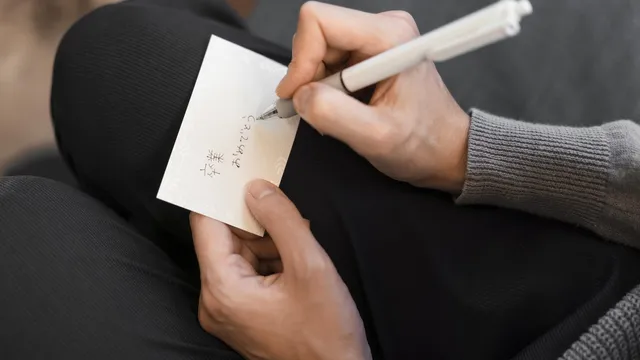
A written message can be short. Three that work:
- “Inna lillahi wa inna ilayhi raji’un. I am so sorry about your father. May Allah have mercy on him and give you all patience.”
- “Thinking of you and your family. Allah yarhamha. I will bring dinner round on Thursday, if that helps.”
- From a colleague who is not Muslim: “I was so sorry to hear about your mother. I am thinking of you, and I am here for anything you need.”
Visiting, food and the three days
Condolences can be offered before or after the burial. Ibn ’Uthaymeen wrote that the time for them runs from the death until the loss has faded from the mind of the one who suffered it, because their purpose is to give strength to bear it with patience.
Many families receive visitors for the first three days. Omar Suleiman of the Yaqeen Institute describes this as a custom rather than a religious duty: it is not wrong, but a family can choose who they see and ask for privacy. A widow keeps a longer period of mourning, four months and ten days, as Sahih al-Bukhari 1281 records.
The tradition asks visitors to lighten the family’s load, not add to it. When Ja’far ibn Abi Talib was killed, the Prophet said, in Sunan Abi Dawud 3132: “Prepare food for the family of Ja’far, for there has come upon them that which has occupied them.” So bring a meal, keep the visit short, and do not expect the family to host or feed you. Loud wailing is discouraged, and quiet tears are not.
If you are not Muslim
You are not expected to know the Arabic, and no one will mind if you do not use it. A sincere “I am so sorry for your loss”, the person’s name, and a memory of them say more than a phrase you are unsure of. If you would like to say Inna lillahi wa inna ilayhi raji’un, it is a kind thing to do. Practical help is the most useful thing of all: a meal, a lift, cover at work. Our guide to writing a sympathy card has more lines to start from.
When the burial is abroad
Some families bury their loved one in another country, beside their parents. Then the janazah may be prayed here before your loved one travels, at home after arrival, or both, and the condolences come from two countries. A Muslim funeral in the UK sets out the rites and the steps here, and repatriation for a Muslim burial abroad explains how the coroner, the consulate and the transport fit around them.
If the family wants the burial in their home country, we send the coroner's notice and open the consulate's file on the day they call.
Repatriation for a Muslim burial abroad- Quran.com, Surah Al-Baqarah 2:155 to 157
- Sunnah.com, Sahih Muslim 918, 920 and 963
- Sunnah.com, Sahih al-Bukhari 1281 and 1284
- Sunnah.com, Hisn al-Muslim 162
- Sunnah.com, Sunan Abi Dawud 3132
- IslamQA, Rulings on offering condolences, answer 106503
- Yaqeen Institute, Omar Suleiman, Condolences, the azza for those left behind

Need to talk to someone?
We answer at any hour, and a call costs nothing. Tell us where your loved one is and we will tell you what happens next.
020 4559 2705



 Nigeria
 Jamaica
 Romania
 Bulgaria
 Slovakia
 France
 Germany
 Hungary