Repatriation for a Muslim burial abroad. The paperwork starts the day you call
When the family wants the burial at home, beside their own, every day counts. We give the coroner notice and open the consulate’s file on the first day, leave time for the ghusl and the shroud before your loved one travels, and bring them to the family at the other end.


“Mr Sebastian Kirila was very kind, very helpful and did all the paperwork for repatriation. They really helped me in the most difficult time.”
“During the most heartbreaking time of our lives, Sebastian from Funero made everything feel calm, respectful, and completely hassle-free.”
“Funero made it very easy. We are very glad we found them. They handled everything. Great price as well.”
“I couldn’t be more impressed. Their pricing was competitive, and the process was incredibly fast.”
From the first call to the burial at home
Call us at any hour. You do not need any documents for that first call.
Step 1
The first call
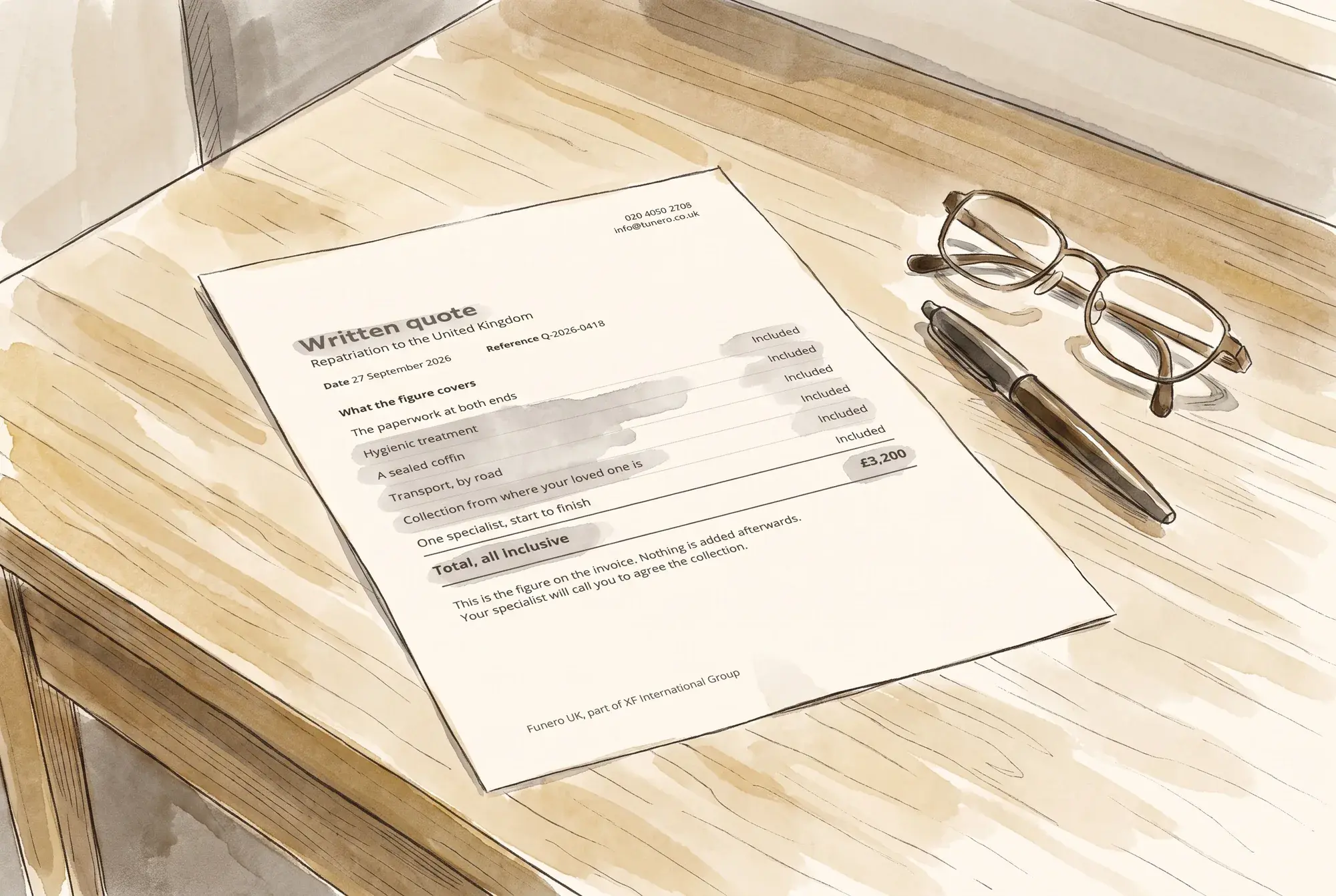
Tell us where your loved one is and where the burial will be. We give you a written quote, usually within 30 minutes, and tell you what the route needs.
Step 2
The coroner and the consulate
We send the coroner the out of England notice on the first day and open the file with the destination’s high commission or consulate.
Step 3
The ghusl and the shroud
The family or the community can carry out the washing and the kafan here, before the coffin is sealed. We tell you on the first call if the route asks for embalming.
Step 4
Home for the burial
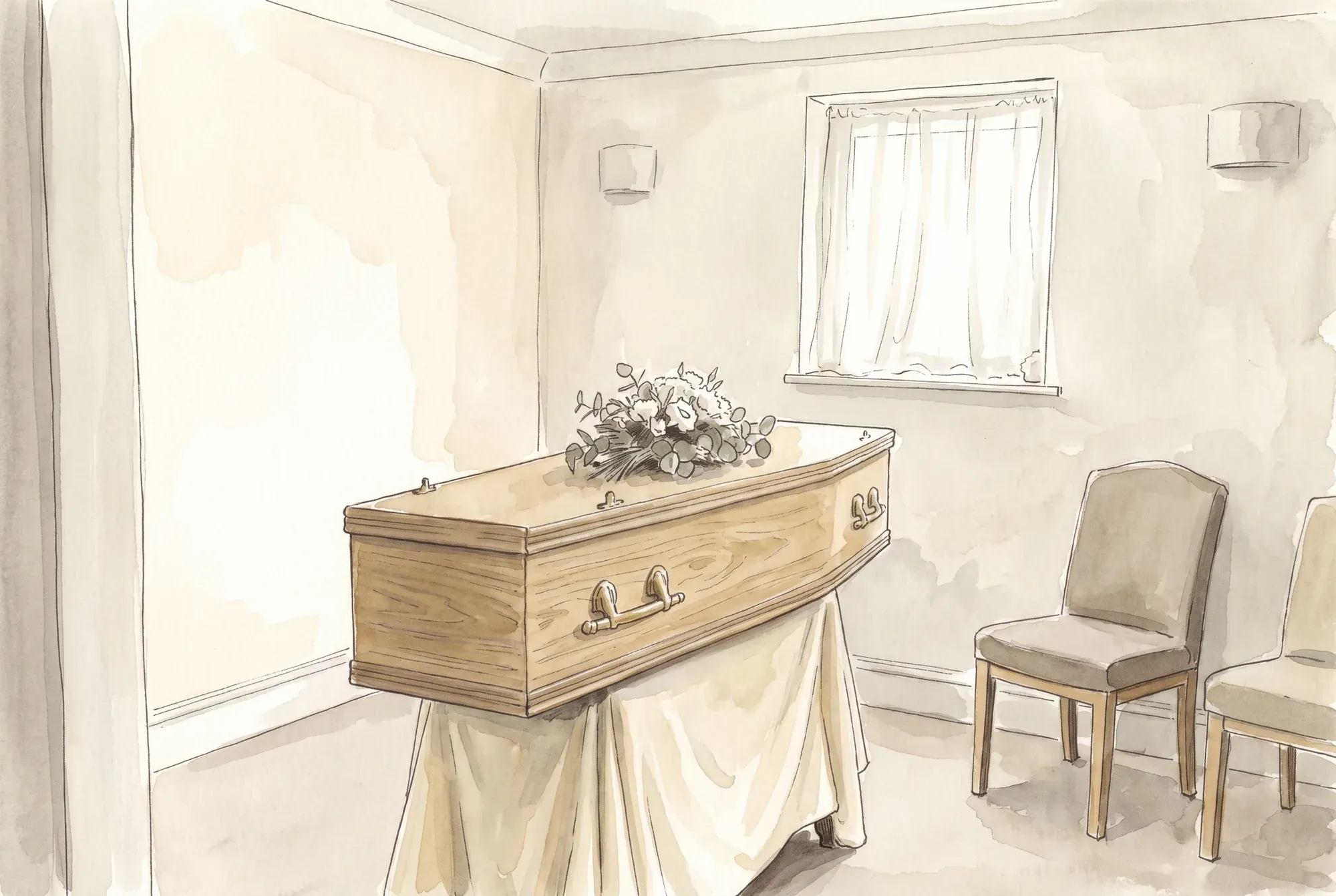
By road or by air, whichever reaches the burial soonest. We bring your loved one into the care of the family or the funeral committee at the other end.

What families tell us went wrong before
A burial abroad has more steps than a burial here. These are the ones that cost a family time.
What usually happens

Nobody sends the coroner’s notice until Monday.
We send the coroner’s notice on the very first day.
Nobody says what the high commission will ask for.
We open the consulate’s file and gather each paper.
Embalming is mentioned only after it has been done.
We tell you on the first call if the route needs it.
The family abroad does not know when to expect them.
The family at home has the arrival day and the time.
Separate bills for the coffin, transport and papers.
One written quote, and that figure is the invoice.
Questions Muslim families ask us
From the UK, a repatriation usually takes 2 to 7 days. What sets the pace is the coroner and the destination’s papers, not the travel itself. The law gives the coroner four clear days’ notice before your loved one leaves England, and the coroner can release them sooner; where the death is not being investigated, that usually takes one to two working days. We send that notice on the first day, before the death is even registered, so the two run side by side.
Yes. The family or members of the community of the same sex can carry out the washing and wrap your loved one in the kafan here, before the coffin is sealed, and the janazah can be prayed here, at home after arrival, or both. A Muslim funeral in the UK sets out each rite.
Most airlines and most destination countries ask for it, and it is their requirement, not a choice made in the UK. It is hard for many families, because Islam asks that the dead be left as they are. We tell you on the first call what your route asks for, before anything is done, and the ghusl and the shroud can still be done here first.
Each country sets its own list, and lists change, so we check the current one on the first day. Pakistan’s High Commission, for example, issues a no objection certificate for your loved one to enter the country, and its consulate’s form has asked for the death certificate, the coroner’s certificate, proof of Pakistani identity, the flight details and an undertaking from a relative. We gather the papers and take them to the mission, and tell you if anything has to come from the family.
Ask the coroner’s officer whether a scan, a CT or MRI post-mortem, would be enough instead. The Chief Coroner’s guidance recognises it as an alternative, though it is not available everywhere. The coroner should also give due regard to a request for a quick decision on religious grounds, so make it early and say why.
No. For a burial here, your mosque’s funeral committee or a Muslim funeral director is the right place to start. We arrange the repatriation when the burial is in another country, and work alongside the mosque or funeral director who cares for your loved one before they travel.
Every country, in both directions. The routes Muslim families ask us about most are Pakistan, Bangladesh, Somalia, Morocco, Turkey, Egypt, Iraq, Afghanistan, Nigeria, Tunisia, Indonesia, Malaysia, and each country page carries the estimate for that route. Every country we cover is listed in one place.
It depends on the country, so each country page carries an estimate, and you can work out an estimate for your country. For a final figure, ask for a written quote: the figure we quote is the figure on the invoice.
In a family's own words
Inna lillahi, and what to say to a grieving Muslim family
A Muslim funeral in the UK, and burial abroad

Religious and cultural requirements in a repatriation

Someone answers, any hour of the day
Tell us where your loved one is and where the burial will be. A written quote, usually within 30 minutes.

 Nigeria
 Jamaica
 Romania
 Bulgaria
 Slovakia
 France
 Germany
 Hungary