Visiting a chapel of rest: what to expect
A chapel of rest is a quiet room where you can spend time with your loved one before the funeral or the cremation. Going is a choice, and so is not going. This is what you will find, what you can do there, and how to prepare, including with a child.


Need to talk to someone?
We answer at any hour, and a call costs nothing. Tell us where your loved one is and we will tell you what happens next.
020 4559 2705At a glance
- What it is
- A private room at a funeral director's, a hospital mortuary or a hospice, where the family can sit with their loved one.
- Who handles it
- Anyone close to the person, children included. The funeral director or the hospital's bereavement office arranges a time.
- How long it takes
- As long as you need within the appointment. Ours is an hour, before the cremation, for the immediate family.
A chapel of rest is a private room where someone who has died is laid out so that the people who loved them can spend time with them. Most are at funeral directors’ premises. Hospitals have viewing rooms in their mortuaries, and hospices have them too. The word chapel is traditional; the room is not religious unless the family makes it so.
Whether to go
Visiting is a choice, and there is no right answer. Many people find that seeing their loved one helps them take in that the death has happened, and puts to rest a fear of what they might see. Others would rather keep the last memory they have of the person alive, and that is just as valid. Bereavement charities are clear that no one should feel expected to go, or feel they have let anyone down by staying away.
What you will find
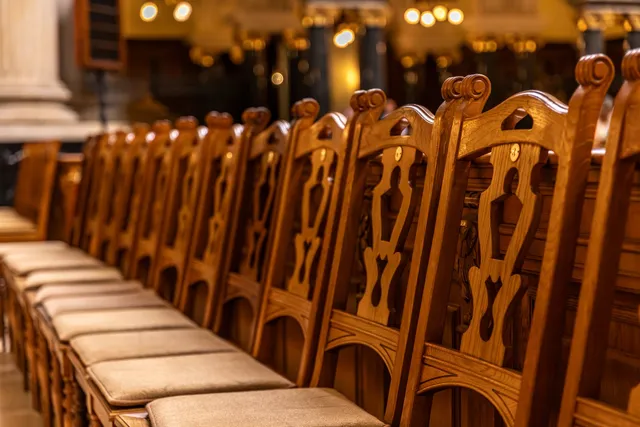
The room is quiet and usually softly lit, with a few chairs. Your loved one will be lying still, often in the coffin, with their eyes closed, and dressed in clothes the family chose or in a simple gown. Their skin will look paler than you remember, and if you touch their hand or face it will feel cool, because the circulation has stopped. That is the part people are most often unprepared for, so it helps to know it before you go in.
What you can do
Almost anything that feels right. You can sit quietly, talk to them, hold their hand, stroke their hair or kiss them goodbye. You can pray, play a piece of music on your phone, or say nothing at all. Many families bring something to leave: flowers, a card, a photograph, a child’s drawing or a small keepsake to go in the coffin. Ask the funeral director first about anything that would go in the coffin for a cremation, as the crematorium has rules about what can be included.
Preparing yourself
Ask the funeral director beforehand how your loved one looks, what they are wearing and how the room is arranged, so there are no surprises. If you can, take a friend or relative with you. Some people like to go in alone first, for a minute, and then bring others in; it also means you can describe the room to anyone who is unsure. If the death followed an accident or an illness that changed how someone looks, the funeral director will tell you beforehand what to expect.
Children
Child Bereavement UK’s advice is that children should be given a real choice, and prepared well, and that those who are tend not to regret going. Tell them simply what they will see: that the person is lying still, that their body has stopped working, that they cannot feel anything and are not in pain, and that they will look pale and feel cold. Describe the room and the coffin. Let them know they can take something with them, and that they can change their mind at the door, even at the last moment. If you are worried about managing your own feelings, another trusted adult can go in with them.
Viewings at a hospital
If your loved one died in hospital, the bereavement office or the mortuary can sometimes arrange a viewing before the funeral director takes over. These are by appointment, usually on weekday afternoons and for a set time, and out of hours only in exceptional cases. If the coroner is involved, a viewing needs the coroner’s permission first. Most hospitals suggest waiting for the funeral director’s chapel of rest, where there is more time and fewer restrictions.
Faith and custom
Practices vary between faiths, and within families. In many Caribbean, Sikh and Chinese families an open coffin and a gathering are usual, while Orthodox Jewish tradition does not have an open coffin at all. If your family has customs of its own, tell the funeral director at the start, and ask about anything you are unsure of.
A viewing before a direct cremation
A direct cremation has no service and no one attends the crematorium, but you can still see your loved one first. We arrange an hour at our chapel of rest, in London or in Nottinghamshire, for the immediate family, by appointment, for £150. Can you attend a direct cremation explains what else you can choose, and saying goodbye when there is no funeral to attend is written for the family deciding what their goodbye will be.
A viewing at our chapel of rest, in London or Nottinghamshire, is an hour with your loved one before a direct cremation, for the immediate family, by appointment, for £150.
Direct cremation, £1,295 fixed- Child Bereavement UK, Supporting a child to view the body of someone who has died
- Child Bereavement UK, Faiths, beliefs, cultures and communities
- Cruse Bereavement Support, Military repatriation
- Citizens Advice, What to do after a death
- Marie Curie, end of life care
- Frimley Health NHS Foundation Trust, Bereavement
- Royal Berkshire NHS Foundation Trust, Advice following a death in intensive care
- Norfolk and Norwich University Hospital, Viewing arrangements
- Ashford and St Peter's Hospitals, Bereavement office

Need to talk to someone?
We answer at any hour, and a call costs nothing. Tell us where your loved one is and we will tell you what happens next.
020 4559 2705