Saying goodbye when there is no funeral to attend
A direct cremation has no service, and a funeral abroad may be one you cannot reach. Both leave a family without the day a funeral gives. Here is what a goodbye can be instead, before the cremation and after it, and why it is not less.

Need to talk to someone?
We answer at any hour, and a call costs nothing. Tell us where your loved one is and we will tell you what happens next.
020 4559 2705At a glance
- What it is
- The goodbye a family can hold when there is no funeral service to attend, by choice or by distance.
- Who handles it
- The family, in their own time and place. Us, for the viewing at the chapel of rest, if the cremation is with us.
- How long it takes
- A viewing is an hour, before the cremation. The hour of your own is whenever you choose. The memorial can be months later.
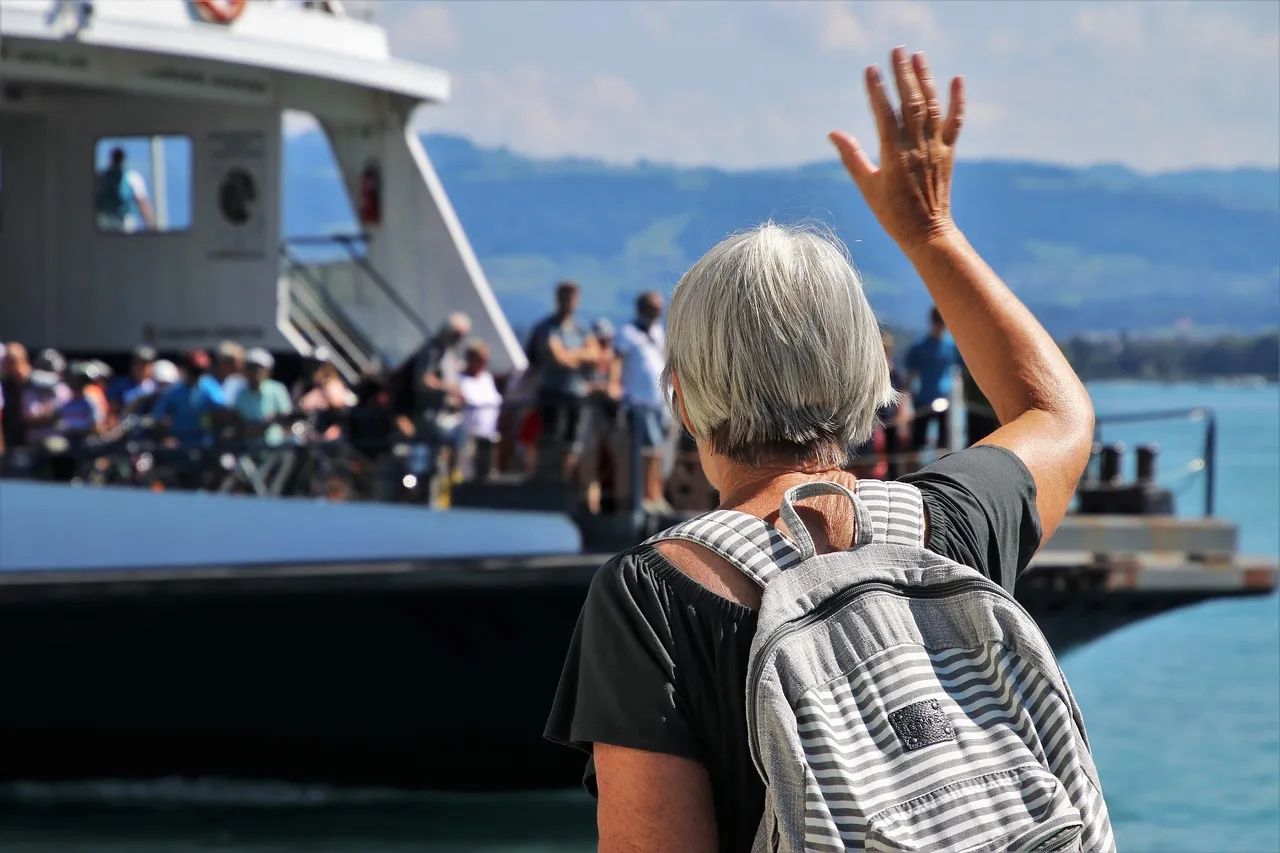
A funeral gives a family a day: a time and a place where the goodbye happens, with everyone there, and a line between before and after. Two kinds of families do not get that day. The family who chose a direct cremation, where there is no service and no one attends the crematorium; and the family whose loved one’s funeral was in another country, held on the third day, before a flight could be found. Both are left with the question of how to say goodbye without the day, and this guide is the answer, in three parts.
Before the cremation: the viewing
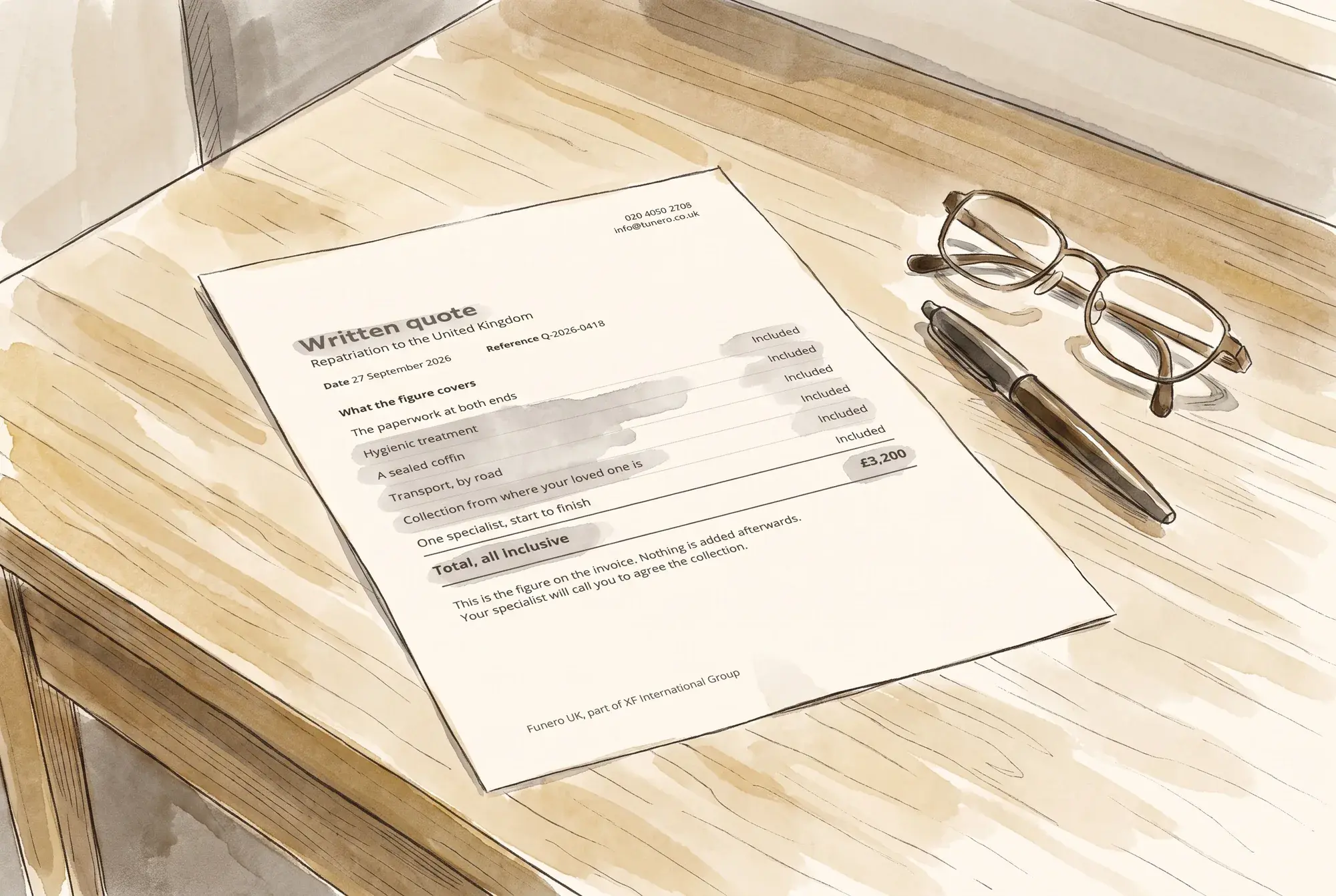
If the cremation is a direct one, the goodbye in person happens before it, at the chapel of rest. A viewing is an hour with the coffin, in a quiet room, for the immediate family. There is no celebrant, no order and no music unless you bring it; families bring a photograph, a letter to go in the coffin, a song on a phone, a child’s drawing, or nothing. Some sit in silence and some talk to the person. Most stay the hour. With us it is £150 and it is the one thing you can add to a direct cremation; can you attend a direct cremation explains why the viewing is here and not at the crematorium.
Not every family wants it, and a family who would rather remember the person as they were is right not to take it. But the families who take it say, more often than they say anything else, that it was the goodbye.
If the funeral was abroad and your loved one left from the UK, the same hour is possible before they leave, at the chapel of rest, and we say so on the first call.
In your own time: an hour you hold yourself
For the family who missed the funeral, or who chose a direct cremation and want a moment before the memorial, the second goodbye is one you make. It does not need a venue or a celebrant. It needs an hour, a place, and two or three people.
A candle, lit at the hour the funeral happened, or the hour the cremation happened, which we tell you. A photograph in the middle of the table. The prayer or the reading your family would have used, said by whoever can say it. Their music. Their food, cooked and eaten together. Their name said aloud by each person, with one memory. And then, because this is what a wake is for, the ordinary talk that follows.
Families who have done this describe it as the thing that let them stop circling the day they missed. It is not a substitute for a funeral. It is a funeral, at the size of the people who are there. Grieving far from home is for the family who missed the day abroad, and it comes back to this hour.
After: the memorial, when you are ready
The third goodbye is the one a direct cremation makes possible, and the one families most underestimate. With the ashes home, and no crematorium slot to fit, the family can hold a gathering when the shock has passed and the people who matter can be there: in a garden, a church, a pub, a front room, on a hill, with the ashes present or scattered as part of it, with a celebrant or without, on a Saturday in spring rather than a Tuesday in the week of the death. Many families say afterwards that this was the better goodbye, because everyone could come and everyone could speak. Planning a memorial service after a direct cremation is written for that gathering.
Children
A child who has no funeral to go to can be at the centre of any of the three: at the viewing, if prepared; at the hour, lighting the candle; at the memorial, choosing the music. Should children go to the funeral is about the funeral and applies to each of these just as well.
Why it is not less
A funeral service is one form the goodbye takes, and it is a good one. It is not the only one, and a family who did not have it has not failed to say goodbye. The viewing, the hour and the memorial are what families have always done alongside funerals; without the funeral they are the whole of it, and they are enough. Why families choose direct cremation has families saying so in their own words, and coping with grief in the first weeks is for the weeks around whichever goodbye you make.
If the cremation is with us, a viewing at our chapel of rest is £150, an hour with the coffin for the immediate family before the cremation, added only if you want it.
Direct cremation, £1,295 fixed- Sue Ryder, How can I cope with bereavement?
- Cruse Bereavement Support, Coping with anniversaries and reminders
- Marie Curie, Planning your own funeral
- Marie Curie, How to arrange a funeral
- Cruse Bereavement Support, Grief and religion
- Sue Ryder, Should children go to funerals?
- Cruse Bereavement Support, Should children go to funerals?

Need to talk to someone?
We answer at any hour, and a call costs nothing. Tell us where your loved one is and we will tell you what happens next.
020 4559 2705

 Nigeria
 Jamaica
 Romania
 Bulgaria
 Slovakia
 France
 Germany
 Hungary