Ashes (cremated remains)
One of eighty-four terms in the funeral glossary
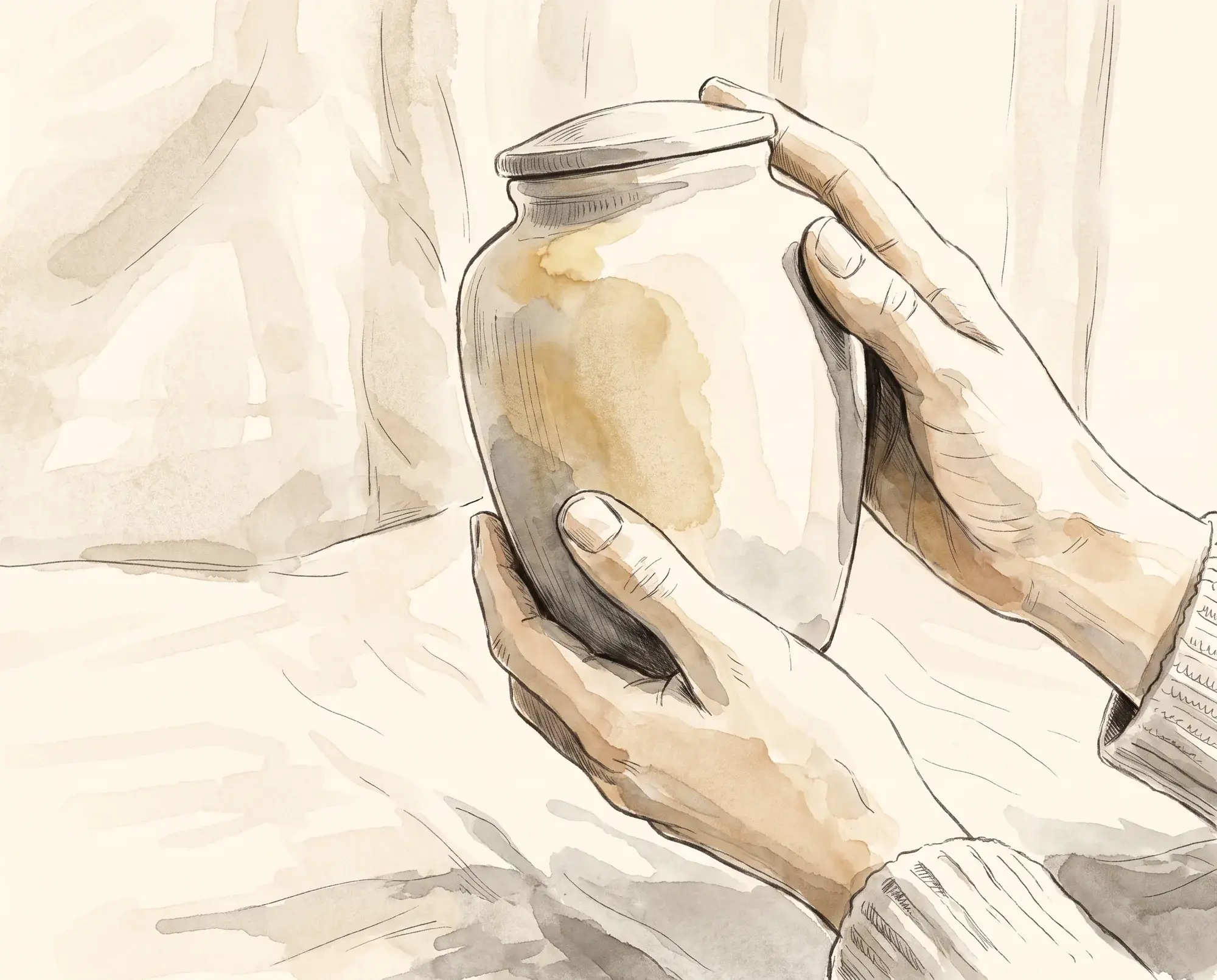
Ashes, or cremated remains, are what is returned to the family after a cremation: pale bone fragments processed to a soft, even consistency. The crematorium releases them to the applicant or the funeral director with a certificate of cremation. Families can keep them, bury them or scatter them.
When the ashes come back
The ashes are usually ready within a few days of the cremation. They come back in a sealed container, often sturdy plastic or cardboard, labelled with the person’s name. A name card stays with the coffin through every stage at the crematorium, and that card is how the crematorium makes sure you receive the right ashes. An adult’s ashes weigh about two to four kilograms, which surprises many families.
What families do with them
There is no deadline and no legal requirement to do anything at all. Many families keep the ashes at home for a while, in the container or in an urn, and some keep them for good. Others bury them in a family grave or a small ashes plot, divide them between relatives, or scatter them somewhere that mattered. Nearly every crematorium also has a garden of remembrance, where its staff can scatter or bury the ashes for the family.
The rules that apply
In England and Wales, the way a crematorium stores, releases and records ashes is set by Part 6 of the Cremation (England and Wales) Regulations 2008. In Scotland the Burial and Cremation (Scotland) Act 2016 applies instead. Scattering on land needs the permission of whoever owns it, though your own garden needs no one’s.
If the ashes are coming from abroad
No import permit is needed to bring ashes back to the UK. Carry the death certificate and the certificate of cremation, and tell the airline before you fly. International agreements on transporting a coffin, such as the 1973 Strasbourg Agreement, leave ashes out of their rules, which is why ashes travel far more easily. Taking ashes abroad covers the other direction.


Someone answers, any hour of the day
Tell us where your loved one is and we will tell you what happens next, and what it costs.

 Nigeria
 Jamaica
 Romania
 Bulgaria
 Slovakia
 France
 Germany
 Hungary