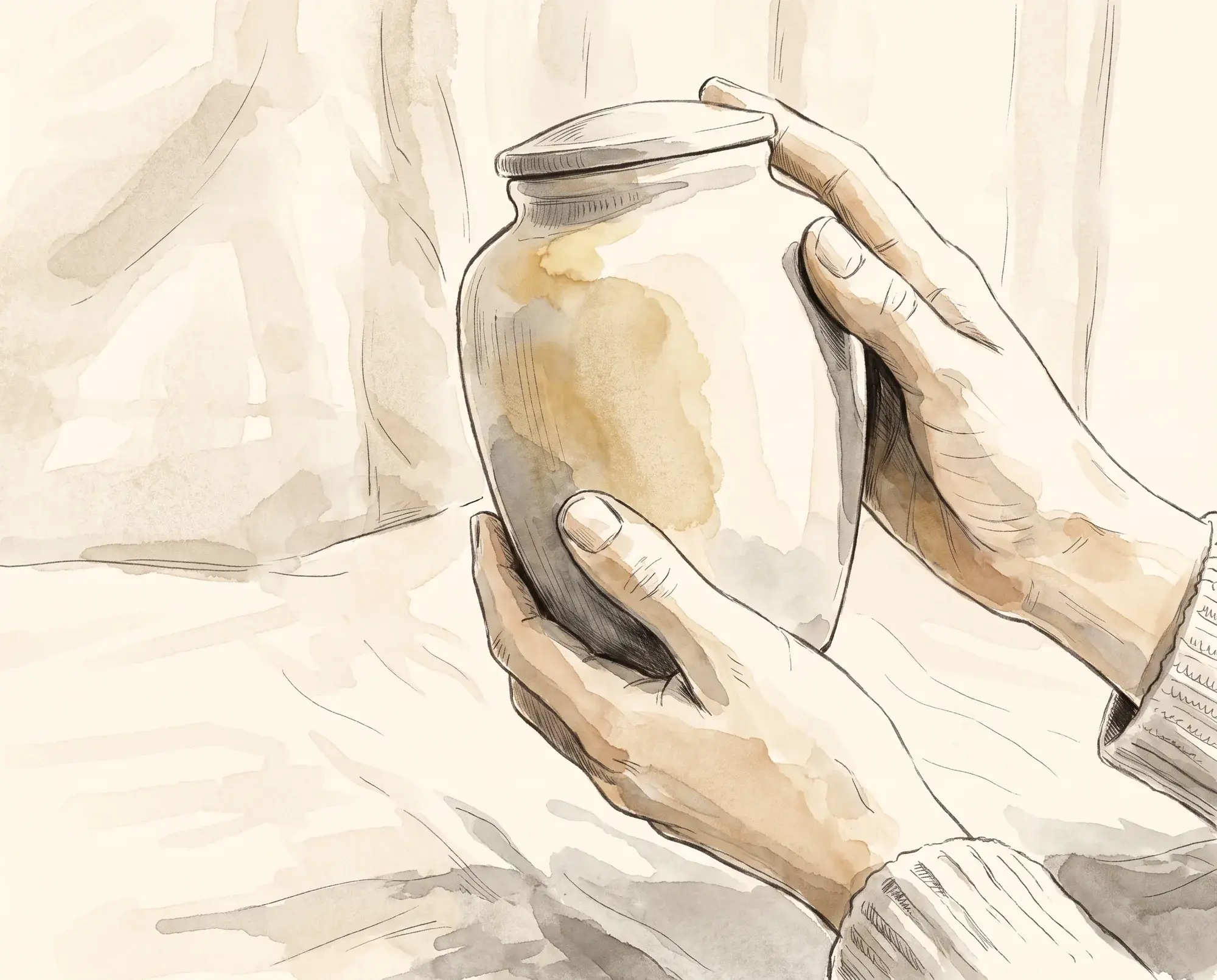
Mourning
One of eighty-four terms in the funeral glossary
Mourning is the outward side of grief: the customs and rituals through which a family and community mark a death, such as receiving visitors or keeping a set period of observance. Its customs vary by faith and culture; in Islam, for example, relatives mourn for three days and a widow for four months and ten days.
Grief and mourning
Grief is what you feel about a death; mourning is what you do about it. Every family and faith mourns differently: the funeral, the wake, wearing black, the forty days, the year’s mind. Some people keep every custom they grew up with, and some shape their own. Neither grief nor mourning has a deadline.
Who sets the customs
No authority issues or sets mourning. It is kept by individuals, families and communities, according to their culture, their faith or their own wishes. That is why two families in the same street may mark a death in very different ways, and both be right.
Mourning in Islam
In the Sunni Islamic tradition, the general mourning period for relatives lasts three days. During that time the family receives visitors, keeps a period of devotion, and may wear simple clothing to mark the loss. A widow keeps a longer period, the iddah, of four lunar months and ten days. Grief is expected to be expressed with dignity: loud wailing, shrieking, beating the chest and tearing clothes are not permitted.
What the law attaches to
Mourning has no legal side. The law attaches money, time off and protections to bereavement, the fact that someone has died, and some of those do have time limits. A family in the first weeks of mourning may find it worth checking what they are entitled to, so that nothing is missed.


Someone answers, any hour of the day
Tell us where your loved one is and we will tell you what happens next, and what it costs.

 Nigeria
 Jamaica
 Romania
 Bulgaria
 Slovakia
 France
 Germany
 Hungary