Medical examiner
One of eighty-four terms in the funeral glossary
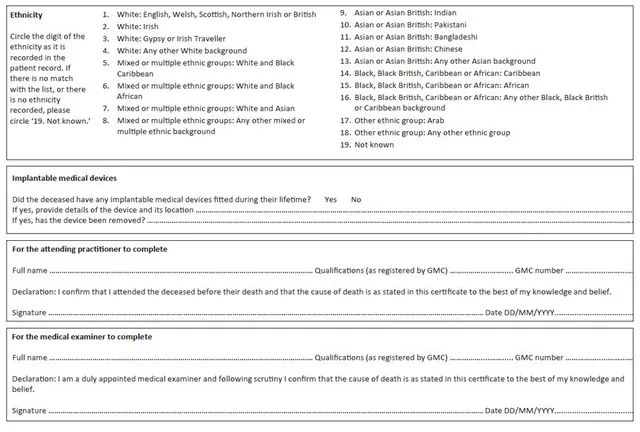
A medical examiner is a senior NHS doctor, not involved in the person’s care, who checks the cause of death for every death in England and Wales that is not referred to a coroner. Their office offers the family a conversation about the cause of death and a chance to raise any concerns about the care given. Since September 2024 a death cannot be registered until the medical examiner has confirmed the cause; Scotland uses its own review service instead.
When the examiner is involved
Once the attending doctor has completed the medical certificate of cause of death, the examiner reads the medical records alongside the proposed cause. This is not an investigation and it does not mean anything is wrong. It happens for every death the coroner is not looking into. Families pay nothing for the review.
The phone call
Someone from the examiner’s office rings you. They explain the cause of death in plain words, check the details, and ask whether you have any concerns about the care your loved one received or about the death. You can decline the conversation. If you do raise a concern, the examiner can refer the death to the coroner. If you disagree with how the cause is worded, say so on this call, because that is when it can still be changed.
What happens next
When the examiner is satisfied, the certificate is sent on electronically and you are told you can book the registration. From that confirmation the death should be registered within 5 days, so it is worth ringing the registrar the same day.
In Scotland and Northern Ireland
The medical examiner system belongs to England and Wales alone. In Scotland the Death Certification Review Service checks a share of certificates, some picked at random and some targeted. Northern Ireland relies on the General Register Office and on referrals to the coroner.

Someone answers, any hour of the day
Tell us where your loved one is and we will tell you what happens next, and what it costs.

 Nigeria
 Jamaica
 Romania
 Bulgaria
 Slovakia
 France
 Germany
 Hungary