Repatriation by road
One of eighty-four terms in the funeral glossary
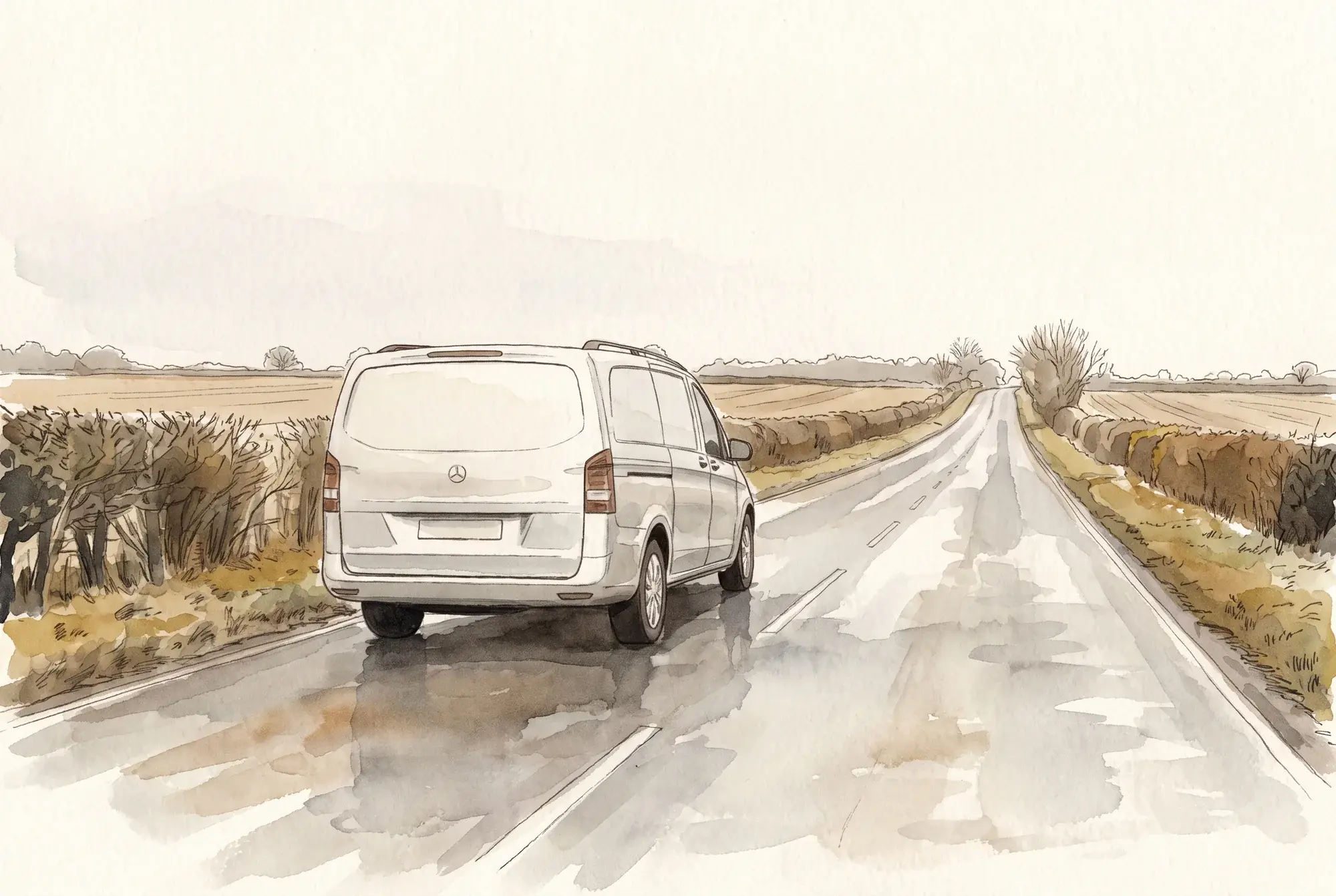
Repatriation by road means your loved one travels to their destination in a funeral vehicle rather than by air. The coffin goes with a laissez passer and the other documents, and some consulates ask in advance for the driver’s details and the vehicle’s registration.
Why road comes first
Most repatriations within mainland Europe go by road, in practice everywhere from Ireland to Romania, Bulgaria and Greece, and it is how Funero arranges most of its own. There are fewer handovers: your loved one leaves the chapel of rest in one vehicle and arrives at the receiving funeral director in the same vehicle, with the same two people. There is no cargo schedule to wait for, because the vehicle leaves when the last document is in hand. Air is for the rest of the world, for islands and for the few countries that require it.
What the vehicle carries
The international rules ask for a hearse or a closed funeral ambulance that carries only the coffin, with the personal belongings and flowers that go with it. The coffin is sealed, and the laissez passer and the other papers travel with it, ready for any border that asks. Inside the Schengen area there are no routine border checks, and since January 2025 that includes the road into Romania and Bulgaria. You can follow in your own car, though the vehicle drives in shifts and will not stop when you do.
What it costs and how long it takes
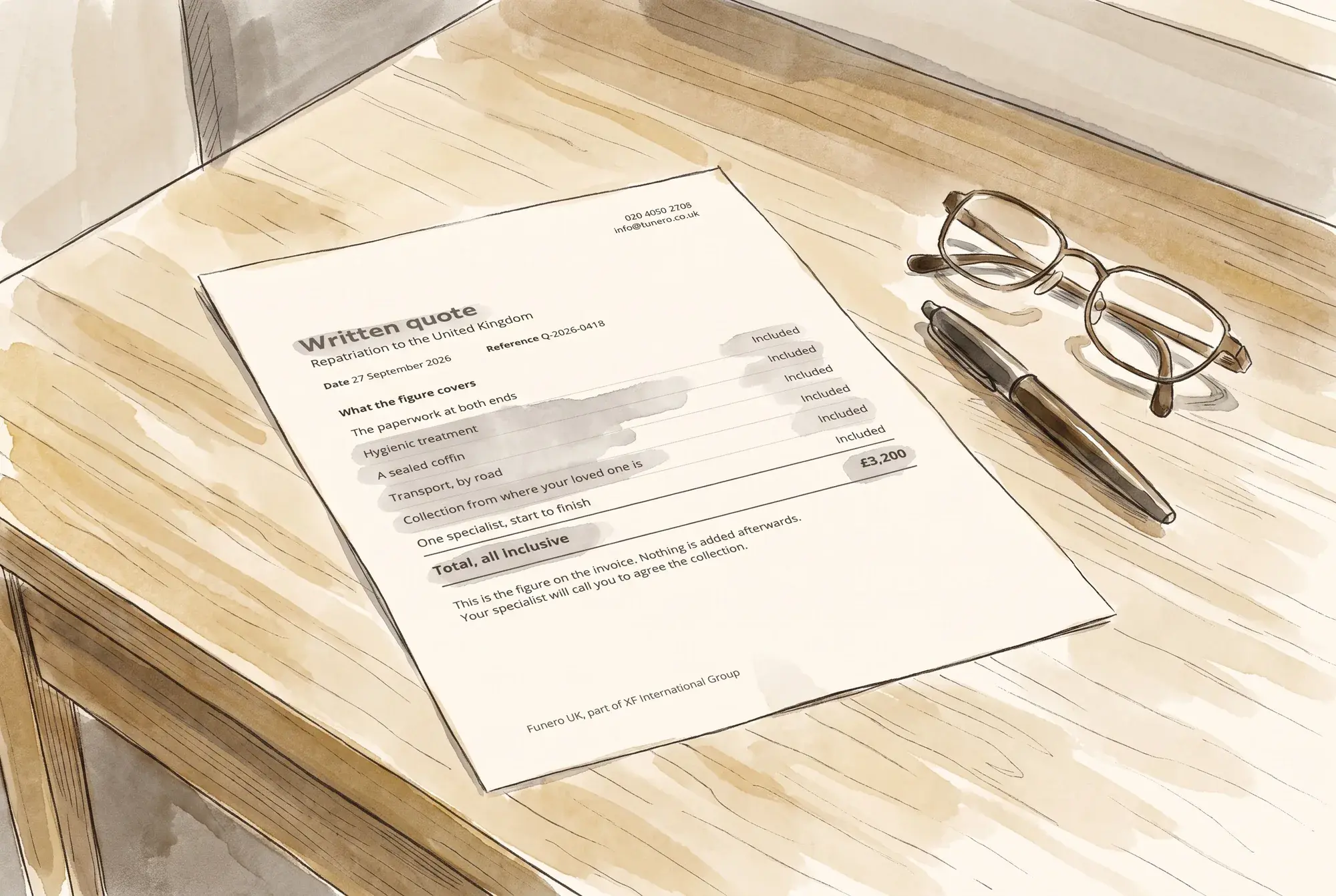
Road is cheaper than air for anywhere it reaches. Estimates for Europe start at £2,800, and every figure is an estimate until the case is known; the written quote is the figure on the invoice. A repatriation usually takes 2 to 7 days, and on the road you can be told at any hour which country your loved one is in and when they will arrive.

Someone answers, any hour of the day
Tell us where your loved one is and we will tell you what happens next, and what it costs.

 Nigeria
 Jamaica
 Romania
 Bulgaria
 Slovakia
 France
 Germany
 Hungary