Repatriation from the UK to Europe by road
For most of mainland Europe we take your loved one home in one of our vehicles, with the same two people from our chapel of rest to the funeral director at the other end. This is the route, the borders, what happens on the way, and what you are told.


Need to talk to someone?
We answer at any hour, and a call costs nothing. Tell us where your loved one is and we will tell you what happens next.
020 4559 2705At a glance
- What it is
- A repatriation by road from our chapel of rest in England to a funeral director in mainland Europe.
- Who handles it
- Two of our own staff, in our own vehicle, from door to door. The receiving funeral director at the destination.
- How long it takes
- The drive itself is one to three days depending on the country, driven in shifts without an overnight stop. The paperwork before it is what sets the date.
A road repatriation is what most families in Europe get from us, and it is the one most of them did not know was possible. Your loved one leaves our chapel of rest in one of our own vehicles, with two of our own staff, and arrives at the funeral director in Poland, Romania, Italy, Spain or wherever home is, in the same vehicle with the same two people. Nobody else handles the coffin. This guide is what happens between the two doors.
Before the vehicle leaves
The drive is the last part of the process and the shortest. Before it, the death is registered, the coroner is notified and acknowledges, your loved one is embalmed and placed in a sealed coffin, the death certificate is legalised with an apostille and, where the destination needs it, translated, and the destination’s consulate in London issues its authorisation. That is the part that takes the time, and sending someone home from the UK goes through it. The vehicle leaves on the day the last document is in hand.
The vehicle and the people
The vehicle is built for this: a purpose-fitted funeral ambulance with a secured compartment for the coffin, temperature controlled, unmarked from the outside. It carries nothing and no one but your loved one, the two staff and the documents. The two drivers share the route in shifts and do not stop overnight, which is how a drive to Warsaw is a day and a half rather than three.
The Channel
The vehicle leaves the UK by the tunnel or the ferry, and this is the border where the documents are actually examined, because France is inside the Schengen area and the UK is not. The death certificate with its apostille, the coroner’s acknowledgement, the embalming and coffin certificates and the consular authorisation are presented, and the crossing is straightforward when the set is complete. It is also the place where a missing document turns a vehicle around, which is why we check the set twice before it leaves.
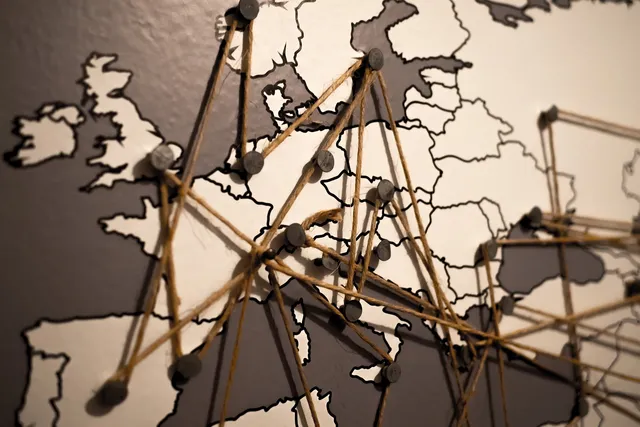
The borders inside Europe
From France onwards, inside the Schengen area, there are no routine border checks. The vehicle drives from France into Belgium or Germany, on through Austria or the Czech Republic, into Hungary, and since January 2025 into Romania and Bulgaria without stopping. Any country can ask to see the documents, and occasionally one does, but the hours-long queues at the eastern borders that families remember from before 2025 are gone; what Schengen membership changed explains that for the two countries it affected most. Ireland is the one European destination with a different shape, reached by ferry rather than the tunnel, with its own border arrangements with the UK.
What you are told on the way
When the vehicle leaves, you are given the expected arrival day and time. At each border the driver reports in and we update you if the estimate has moved. When the vehicle reaches the receiving funeral director, you are told, and so is the family at the destination. You can follow in your own car if you want to, though the vehicle will not stop when you do, and most families instead travel separately and meet their loved one at the funeral director.
The handover
At the destination the receiving funeral director takes your loved one and every document from the driver, in person, and signs for both. From that point the funeral is theirs to arrange with your family, and their invoice is separate from ours; what a repatriation fee covers explains where the line falls. We hand over to a funeral director we work with in that country, or to the one your family has chosen.
Where road stops and air begins
Road, for anywhere in mainland Europe from Ireland to Greece. Air, for islands without a ferry the coffin can use, for the rest of the world, and for the few countries whose rules require it. The choice is made by the route and we tell you why; by road or by air sets out where the line falls.
What it costs
Road is why our European estimates start at £2,800 for the nearest countries and £3,200 for the rest of Europe; how much does repatriation cost from the UK has the bands, and the Europe route page the estimate for the continent. The estimate becomes a written quote once we know the case, and the quote is the figure on the invoice.
Everything before the vehicle leaves is in repatriation, step by step, which is where the time actually goes.
Tell us the destination and we tell you the route and the day the vehicle can leave, with a written estimate the same day. The quoted figure is the invoiced one.
Repatriation to and from the UK- legislation.gov.uk, The Removal of Bodies Regulations 1954
- GOV.UK, Get a document legalised
- Regulation (EU) 2016/1191 on public documents
- European Commission, Bulgaria and Romania join the Schengen area
- GOV.UK, Romania travel advice, entry requirements
- European Commission, Schengen area

Need to talk to someone?
We answer at any hour, and a call costs nothing. Tell us where your loved one is and we will tell you what happens next.
020 4559 2705