
















Around the world, cultures have found their own ways of honouring the dead — some solemn, others joyful, and some that challenge Western assumptions about what a farewell should look like. Few traditions are as distinctive as the Malagasy practice of Famadihana, unique to the Merina people of Madagascar.
Known as the “Turning of the Bones” or the “Dance with the Dead,” Famadihana is a ritual that treats death not as a final separation but as a continuing relationship between the living and their ancestors.
{{snapshot}}
At a glance
What it covers
The Famadihana festival — a Malagasy ancestral ritual in which families exhume, rewrap, and dance with deceased relatives.
Who it's for
Anyone curious about how other cultures approach death, grief, and the honouring of ancestors.
Key takeaway
Famadihana reflects a belief that the spiritual bond between the living and the dead does not end at death — it is actively maintained.
{{/snapshot}}
What is the Famadihana festival?
The Merina people believe that the souls of the deceased remain present on earth as long as their physical remains exist. Rather than viewing this as morbid, they see it as an opportunity for continued connection — and a responsibility of care.
During the dry months (May to October), families gather to perform Famadihana. They exhume the bones of deceased relatives, clean them carefully, and rewrap them in fresh white silk cloth — considered a new garment for the afterlife. The bones are then carried around the family tomb while musicians play and the community celebrates.
The ceremony typically takes place every five to seven years, at a time advised by local astrologers. Hosting a Famadihana is a significant commitment: families invest considerably in the tomb, the fresh silk, food, and festivities.
The tombs and their meaning
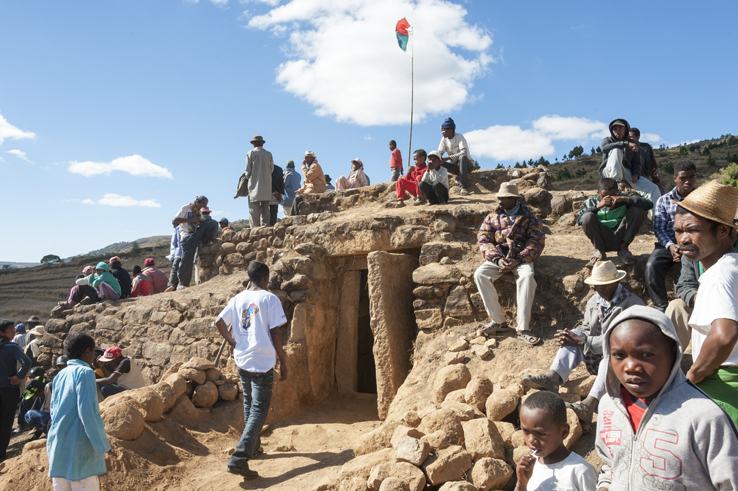
Family tombs are built partly underground, with chambers where ancestors' wrapped bodies rest on shelves. These structures are among the most important buildings in Merina culture — reflecting both a family's social standing and their commitment to ancestral bonds. The tomb is not a place of mourning; it is a gathering point for the living and the dead.
How the ceremony unfolds
The ceremony begins with the retrieval of the ancestors from the crypt. Bones are carefully cleaned and rewrapped in new cloth. The living then communicate with their ancestors — sharing news, expressing wishes, and asking for blessings — in the belief that the deceased remain protective presences in their descendants' lives.
The atmosphere is celebratory: music plays, people dance holding the wrapped remains, and the occasion is filled with laughter and togetherness. The festival typically lasts around two days, concluding with the respectful return of the ancestors to their tomb, along with offerings of food, money, and alcohol.
Controversy and resilience
Famadihana is not without tension. The Catholic Church and other religious organisations in Madagascar have criticised the practice, viewing it as a pagan ritual. Outbreaks of certain diseases have also led Malagasy authorities to impose periodic restrictions on exhumation. Yet the tradition endures in many regions, remaining a vital expression of Merina identity and a powerful symbol of family continuity across generations.
For those interested in how death is understood differently around the world, our articles on Mexico's Día de los Muertos, funeral traditions in Africa, and Tibetan funeral traditions explore other remarkable practices from around the globe.