Choosing an urn
The right urn depends on one thing, what you are going to do with the ashes, and the rest follows. Here is the choice for keeping, burying, scattering, dividing and travelling, with the size and the materials that each needs.

Need to talk to someone?
We answer at any hour, and a call costs nothing. Tell us where your loved one is and we will tell you what happens next.
020 4559 2705At a glance
- What it is
- How to choose a container for cremated ashes, by what the family intends to do with them.
- Who handles it
- The family. A funeral director can supply one, or the family can buy one anywhere; nothing requires it to come from the funeral director.
- How long it takes
- There is no deadline. The container the ashes come back in is fine for months or years.
The ashes come back in a plain container, usually a sturdy plastic or cardboard one from the crematorium, and it is perfectly good for as long as you need it. An urn is a choice, not a requirement, and the right one depends almost entirely on what you intend to do with the ashes. Decide that first, or decide to decide later, and the urn follows. What to do with the ashes is the guide for the first decision.
Size first
An adult’s ashes are about two to four kilograms and take up around three litres, and a large adult’s more. Urns are sold by capacity, in litres or in cubic inches, and the working rule is one cubic inch per pound of the person’s weight, so a 180-pound person needs about 180 cubic inches, which is around three litres. Buy the capacity before the design, because an urn that is beautiful and too small is the commonest disappointment.
For keeping at home
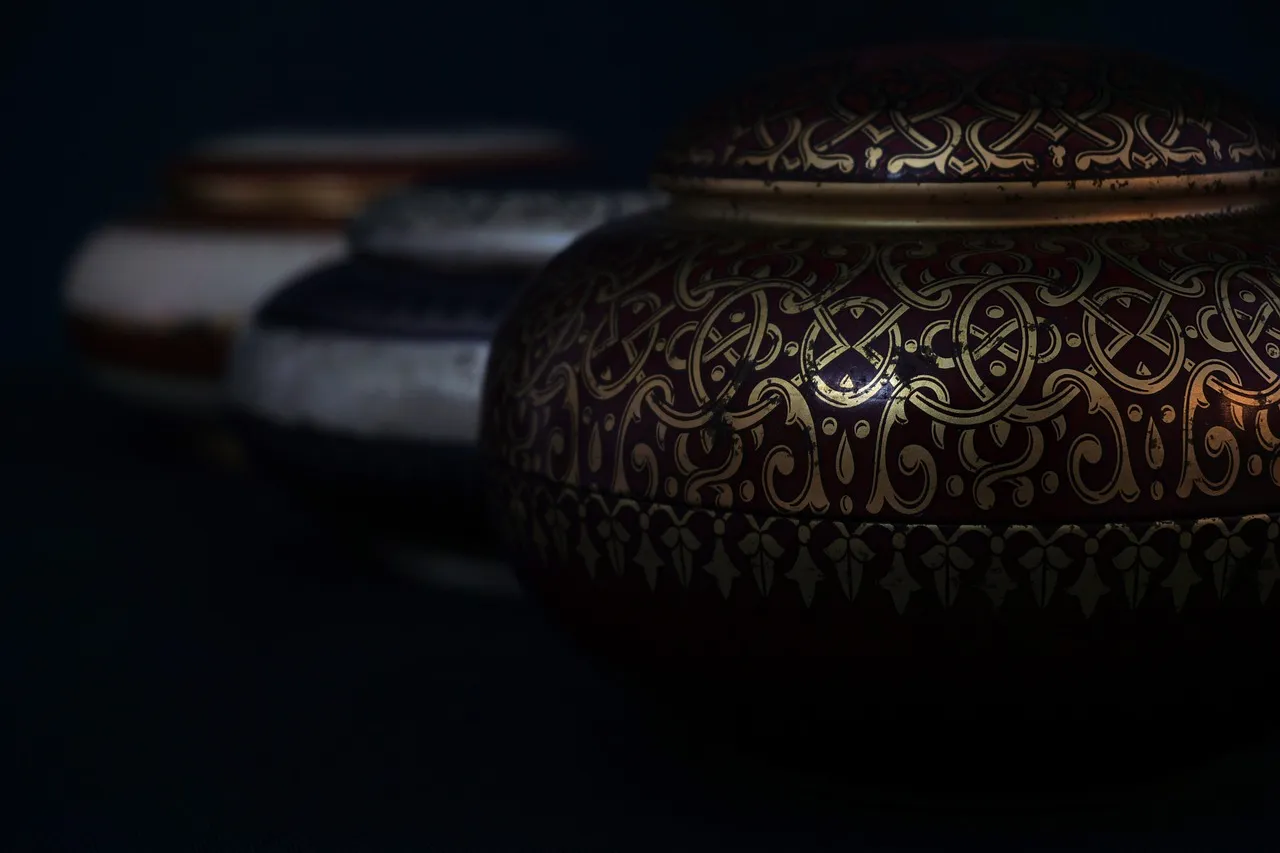
Anything the family likes the look of and that seals well: wood, ceramic, stone, metal, glass. This is the one use where the material is entirely about taste and the room it will sit in. A threaded or sealed lid matters more than it seems, because the ashes should not be able to spill, and an urn that will be moved between houses over the years should be robust.
For burying
A biodegradable urn, of untreated wood, cardboard, salt, sand or plant fibre, for a burial in the ground or at sea, so that the urn returns to the earth with the ashes. Most cemeteries and churchyards require one for an ashes plot and will say what they accept. A metal or ceramic urn can be buried in a family grave where the cemetery allows it, and it will last.
For scattering
A scattering tube: a tall cardboard tube with a perforated lid, which lets the ashes be released in a controlled way even in a breeze, and which is light enough to carry up a hill. Funeral directors supply them, often for very little or included, and they are the right tool for the job regardless of what the ashes are kept in afterwards. For scattering at sea, a water-soluble urn that floats briefly and then dissolves is the alternative.
For dividing
Keepsake urns, small versions of a full urn holding a token amount, for family members who each want some of the ashes; and jewellery, pendants and rings with a small sealed chamber, for the same purpose. Dividing takes nothing from the person, and a family spread across countries often finds it the answer.
For travelling
If the ashes are going abroad or on a flight, the urn has to pass an airport X-ray scanner, which means wood, cardboard, plastic, biodegradable materials or a light ceramic, and not metal or thick stone, which block the image and can mean the ashes are not allowed through. Many families use a plain travel urn for the flight and transfer the ashes to the one they have chosen on arrival. Taking ashes on a plane has the airline and airport rules.
Where to buy one
From the funeral director, from a memorial retailer, from a craftsman, from anywhere. Nothing requires an urn to come from the funeral director who arranged the cremation, and prices range from a few pounds for a scattering tube to several hundred for a handmade piece. Ask us and we will tell you which kind suits what you have in mind. Whichever you choose, the container the ashes came back in is fine until it arrives.
If you cannot decide
Then do not. The families who buy an urn in the first week often buy one for a use they later change their mind about, and the container from the crematorium asks nothing of you. Decide what the ashes are for, in your own time, and the urn is then a ten-minute choice.
Direct cremation step by step covers how and when the ashes are returned, which is the moment the urn is for.
If we carry out the cremation, we return the ashes in a simple container and can tell you which kind of urn suits scattering, burial or keeping them at home.
Direct cremation, £1,295 fixed- Federation of Burial and Cremation Authorities, FAQs
- Environment Agency, Scattering ashes on water and garden burials policy
- British Airways, Can I take cremated remains or an urn when I fly

Need to talk to someone?
We answer at any hour, and a call costs nothing. Tell us where your loved one is and we will tell you what happens next.
020 4559 2705